Designed to appeal to as many senses as possible, a sensory garden can be a very rewarding place to spend time. They’re far more than a beautiful space, sensory gardens are designed specifically for the individuals who will use them. For example, if building a sensory space for a school you will want to encourage curiosity and touch, through lots of bright colours, smells, engaging textures and interactive elements. Children with special educational needs will particularly benefit from environments that allow them to explore using multiple senses.
In a healthcare setting such as ours, sensory planting supports the wellbeing of residents, particularly those living with dementia. By engaging all five senses gently and purposefully, sensory gardens can spark happy memories and comforting nostalgic feelings, encourage independence, and create joyous times.
Across Aria Care communities, our sensory gardens are built with insight, compassion, and collaboration, always shaped by the people who will enjoy them. Below, we explore how to design a sensory garden for dementia, why they matter, and the practical features that make them truly supportive.

A sensory garden is an outdoor space designed to stimulate the senses through scent, colour, texture, sound and taste. For people living with dementia, these spaces can:
When designed thoughtfully, a sensory garden becomes a reassuring place to explore, offering meaningful moments for residents, families and teams to share together.
For many people living with dementia, sensory experiences remain deeply rooted. This is why a simple scent, the rustle of grasses, or the warmth of sunlight can create moments of clarity and emotional connection.
Sensory gardens support:
Calming scents, gentle sounds and familiar plants help reduce feelings of agitation and support a settled mood.
Familiar aromas, colours or plants can trigger memories and stories, often unlocking experiences that may feel harder to access indoors.
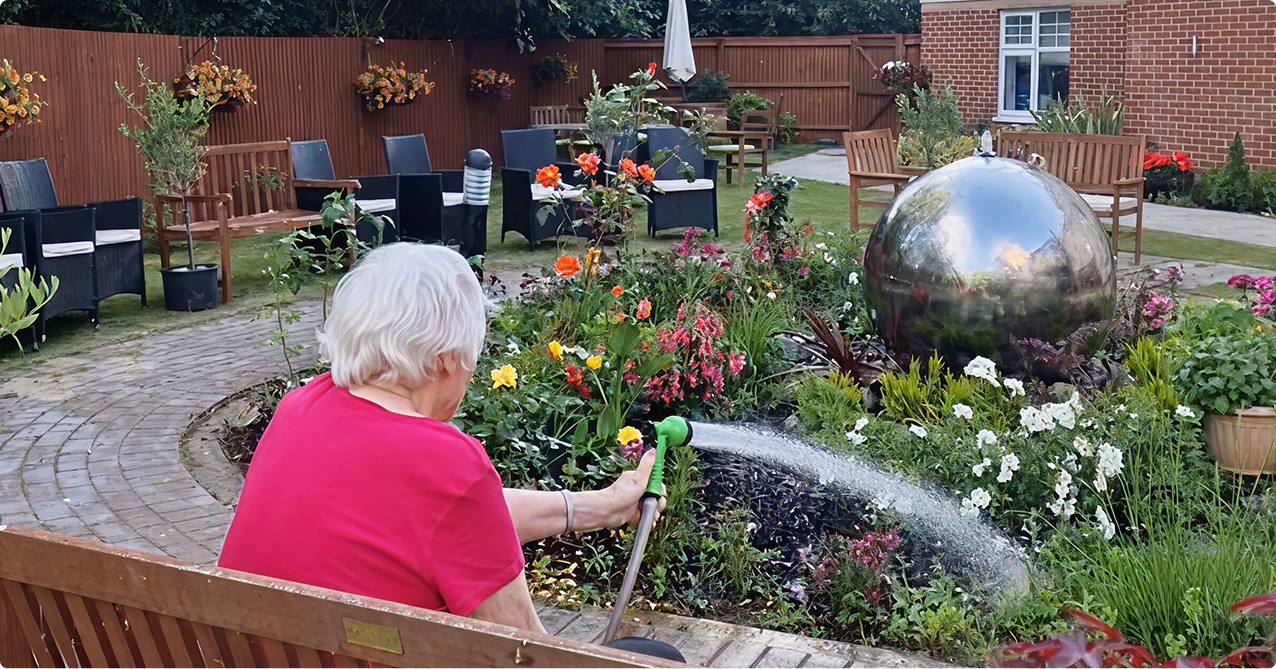
Gardens provide an environment where people can explore freely and participate in meaningful activities, from watering plants to picking herbs, helping them maintain a sense of self.
Gardens encourage families, residents and care teams to spend unhurried time together, supporting natural conversation and companionship.
A supportive sensory garden must offer freedom within safe boundaries. Key considerations include:
Erik Cortez, Clinical Deputy Manager at Cedar View Care Centre, explains:
“When designing a sensory garden, particularly for individuals with dementia, safety is paramount. Ensuring clear, weed-free pathways is crucial… Implementing non-toxic plants, clear signage, and secure boundaries also comprised vital aspects of our safety considerations.”
A garden designed for sensory engagement should feel vibrant, comforting and varied. To achieve this, consider:
Aromas
Lavender, mint, rosemary, thyme, jasmine and lemon balm can evoke memories, promote relaxation and invite exploration.
Textures
Plants such as lamb’s ear, ornamental grasses, ferns and soft herbs encourage gentle touch.
Visual interest
Use contrasting colours, seasonal flowers, and varying heights to support visual stimulation without overwhelming the senses.
Sound
Wind chimes, rustling grasses or soft water features can create a calming atmosphere and support orientation.
Taste
Edible herbs, berries and salad leaves offer curiosity, flavour and seasonal connection.
People should feel able to pause, rest and enjoy the space at their own pace.
A sensory garden should invite participation in ways that feel natural and enjoyable.
One example from our communities:
“The birds and other natural visitors to the garden are always a talking point for our residents. It often helps them recall fond memories of past pets or times spent in their garden.”
Traditional plants such as roses, honeysuckle or herbs offer comfort through recognition and can initiate personal memories or stories.
Dedicated areas with nostalgic plants, objects or photos help support identity, encourage reminiscence and create natural opportunities for conversation.
Simple tasks (watering, planting seeds, trimming herbs) offer purpose and a sense of achievement. For many, these activities feel grounding and deeply familiar.
A sensory garden thrives when it is actively used and understood.
Designed by Erik Cortez, Clinical Deputy Manager, the sensory garden at Cedar View is a vibrant example of what careful planning and collaboration can achieve.
“Selecting specific plants and features for the sensory garden at Cedar View required meticulous planning and collaboration. Seasonal plants were thoughtfully chosen to ensure perpetual blooming and greenery.
Central to our garden, the water fountain sphere, although a pre-existing feature, underwent necessary repairs to become a functional and aesthetic focal point. We prioritised the inclusion of non-poisonous, scented, and colourful plants for a safe and engaging sensory space for all our residents to explore and enjoy.
Cedar View Care Centre, partnered closely with a local gardener, ensuring the space remains healthy, stimulating and loved throughout the year and beyond. The partnership also ensured excellent value and specialist guidance.
Mark Reeve, Senior Plants Advisor at Coolings Garden Centre recommends:
“Santolina, Brachyglottis, Convolvulus cneorum, Lavandula, Edelweiss, Stipa tenuissima and Thymes such as Woolly Thyme, are all good to brush your hands through. Most herbs are good for scent so again, Thyme is a great choice – there are lots of different types of scented thyme too. Rosemary, Sage, Mint, Lemon Balm, Lemon Verbena, Basil are other wonderful herbs to incorporate.
Be mindful when choosing shrubs as some of the scented ones are toxic – Daphne being one. Buddleja or Osmanthus delavayi would provide scent through the spring and summer.
Mark also notes that herbs thrive in well-drained soil and sunny spots, making them an ideal foundation for many sensory gardens.
A well-designed sensory garden can:
For people living with dementia, these spaces are not simply gardens, they are places of belonging, reassurance and joy.
More information about our Dementia care offering can be found on our website. Alternatively, if you’d prefer to speak to one of our team, contact us today.
RELATED ARTICLES:
Related respite care articles you may also find useful:

What Is Respite Care, And How Can It Help Your Family?


Understanding the End-of-Life Stages

Share this post
More from Aria Care

What Is Dementia? Causes, Types, & Life Expectancy

Early Signs Of Dementia In Men

Short Term Respite Care Everything You Need to Know