Changes to the Body Clock and Evening Sensory Overload
Many people living with dementia experience changes to the brain’s internal body clock, which can affect sleep patterns and increase feelings of disorientation as daylight fades.
Lower light levels in the evening can also make shadows appear stronger or spaces feel unfamiliar, which may heighten sensitivity to noise or movement around them.
- We maintain consistent daily routines, with predictable mealtimes and gentle structured activities.
- We ensure warm, reassuring lighting in the late afternoon and evening to reduce confusion caused by dim or inconsistent light.
- We use light-based approaches (where helpful) to support healthier sleep-wake rhythms.
Fatigue and End-Of-Day Exhaustion
By late afternoon, many people simply feel tired – physically, mentally or emotionally. Fatigue may make it harder to process information or communicate needs.
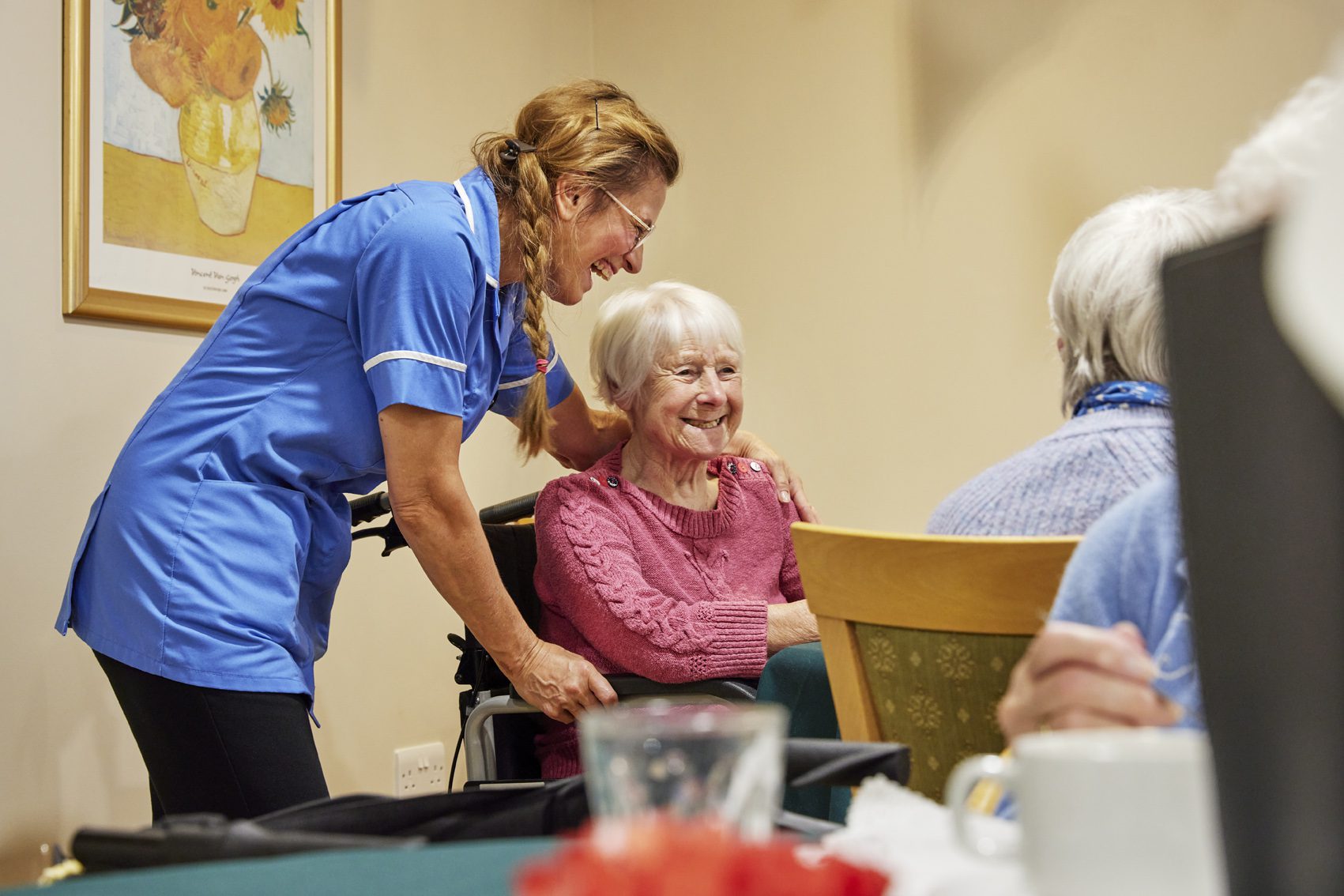
We recognise when someone is becoming tired and gently adjust the pace of the day, offering calm activities, quieter environments, or time to rest.
Disorientation and Feeling Unsafe
As the day fades, it may become harder for someone to recognise where they are, who is nearby, or what is happening next. This can understandably cause worry or unease.
Our teams work closely with each resident to understand their individual history, preferences and communication style. This helps us tailor support respectfully and sensitively. Our approach includes:
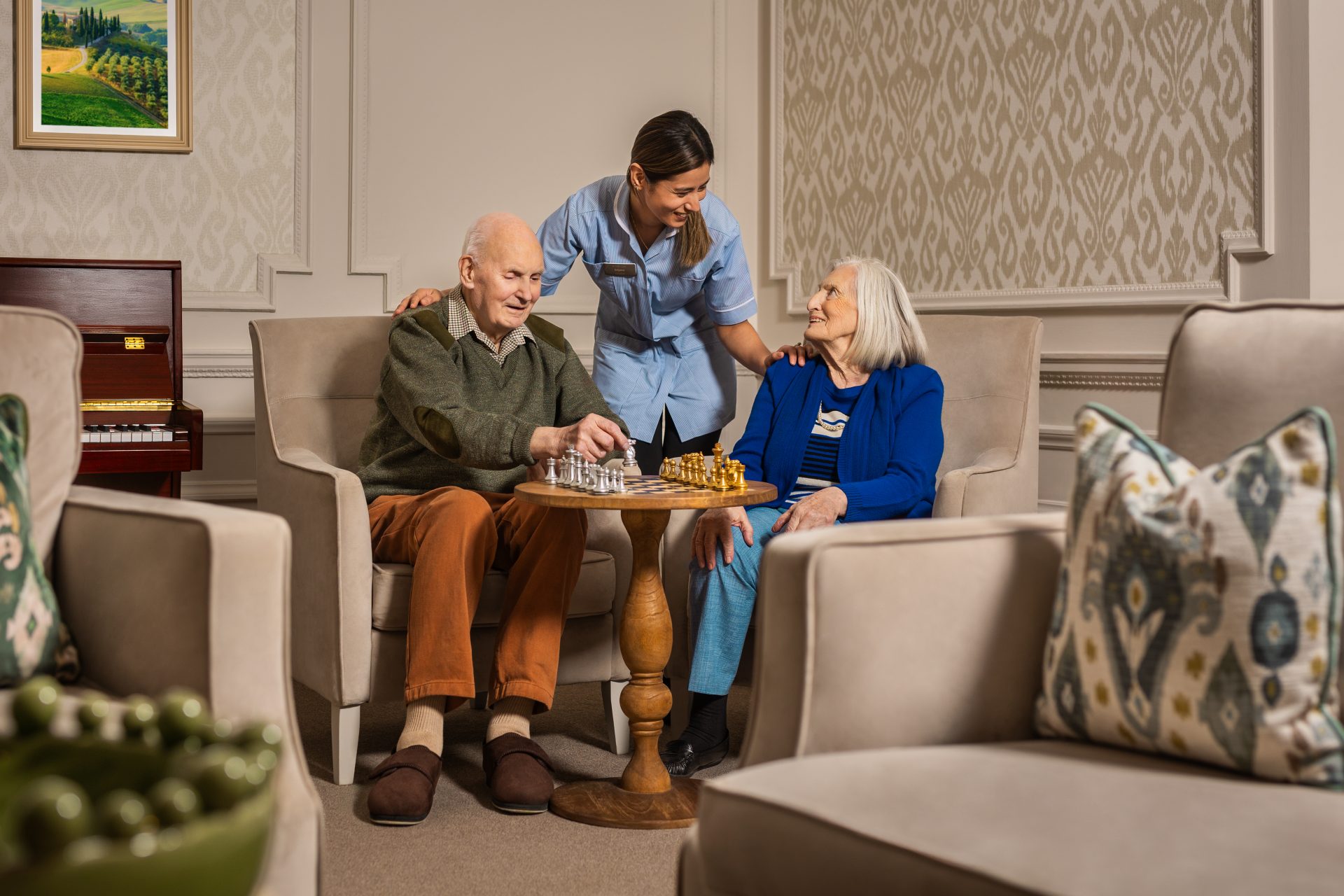
- Calming activities such as music, pet therapy, aromatherapy or gentle stretching
- Comforting environments using familiar objects, soft lighting and soothing colours
- Dedicated calm spaces where residents can re-centre, accompanied by a supportive carer who offers presence, not pressure
Our chefs prepare nutritious, balanced meals, and we avoid caffeine or heavy meals later in the day to support relaxation and better sleep. For residents who prefer familiar foods, we love incorporating their favourite dishes, shared by them or their loved ones, into our menus.
We also pay careful attention to the presentation of modified diets to ensure dignity and enjoyment at every mealtime.
“One of our residents tends to become noticeably more agitated and starts wandering around the lounge in the late afternoon. We noticed this tends to happen when the TV is on with loud, fast-moving programmes, and there are multiple staff members moving quickly through the room during shift change. The combination of sensory overload, a noisy environment, and the disruption of her usual routine seems to unsettle her. By providing a quieter space, lowering background noise, and gently engaging her in a familiar activity like looking through her favourite photo album, we’ve been able to help her feel calmer and reduce these sundowning episodes.” – Aria Care, Dementia Lead
Medication Considerations
Some medicines taken for dementia or other conditions may have side effects that influence evening confusion or restlessness.
Our Aria nursing teams review each person’s medication regularly, working alongside external healthcare professionals to ensure treatments remain appropriate. Our digital care systems help us monitor changes quickly and respond safely.