Therapy dolls, sometimes known as dementia dolls or companion dolls, are designed to provide comfort, reassurance, and engagement for people living with dementia, particularly in the later stages of their journey.
The approach is based on reminiscence therapy, which uses familiar objects, activities, and stimuli to evoke positive emotions and memories. For many people, caring for a doll offers a soothing sense of purpose and calm, making it a meaningful part of person-centred dementia care.
At Aria Care, we see therapy dolls as a gentle way to bring connection and joy to daily life, one of many ways we support residents to live with heart and dignity.
Benefits Of Doll Therapy For People Living With Dementia
Each person’s experience with dementia is unique, and so are their responses to therapy dolls. Many find the experience calming, familiar and very comforting.
Here are some of the ways therapy dolls can make a difference.
Gentle Stimulation
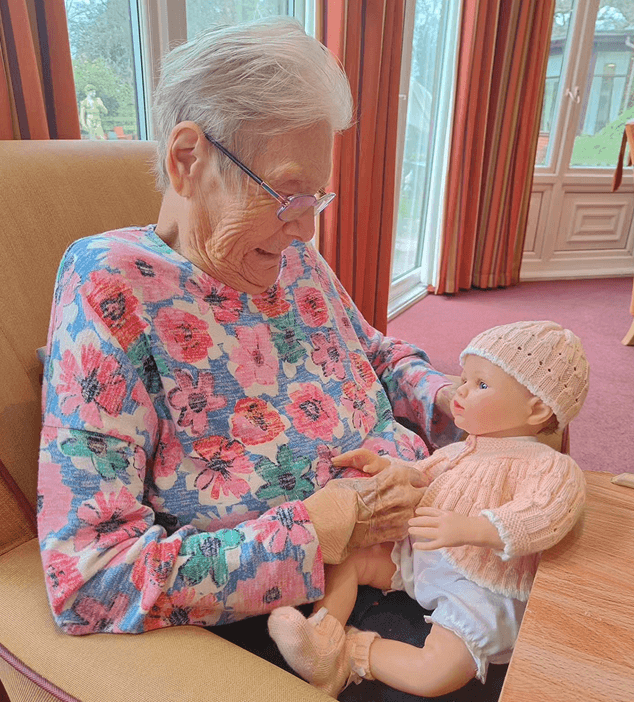
Therapy dolls can help stimulate the senses through touch, sight and sound
- Tactile comfort: The soft materials and natural weight of the doll can feel soothing to hold, helping people feel instantly more relaxed
- Auditory engagement: Talking, humming, or singing to the doll can stimulate speech and hearing, supporting communication.
- Visual focus: The doll’s lifelike features and colours attract attention, encouraging interaction.
- Visual focus: The doll’s lifelike features and colours attract attention, encouraging interaction.
Encouraging Communication
Therapy dolls are great conversation starters – with care professionals, family members, or friends. They can also be a bridge between generations, helping children or grandchildren share time and laughter with their loved one. Our Aria Care teams often use the dolls to initiate discussions, ask questions, and encourage verbal interaction.
For many, the doll becomes a shared talking point that encourages the sharing of stories, reminiscence, and at times, some gentle humour.
Reminiscence And Connection
For some, holding a doll can bring back cherished memories of parenthood or caring for others, or even pets. This can rekindle feelings of love and responsibility – emotions that contribute greatly to wellbeing and identity.
Caring for a doll can also inspire purpose and confidence, encouraging participation in daily routines and social activities. Connecting to the outside world in this way can boost their energy, activity levels, and mood.
Routine And Reassurance
Predictable, familiar routines can be comforting for someone living with dementia. Caring for a therapy doll, perhaps by dressing, feeding, or soothing it, can provide structure and rhythm to the day.
Establishing these small but purposeful rituals helps promote calm, stability and independence, all of which are central to Aria Care’s person-led approach. In turn, we notice improved sleep patterns, behaviour and confidence.
Reducing Restlessness And Anxiety
Many people living with dementia experience restlessness, particularly in the late afternoon or evening (sometimes referred to as sundowning). Interacting with a therapy doll can provide focus and reassurance, helping to reduce feelings of agitation or confusion. For example, in the early evenings, we often experience dementia residents feeling a strong need to ‘go home’, or wanting to put their child to bed, even if they are grown up.
By redirecting attention and focus to a comforting activity such as a doll, the person often feels calmer, more secure, and emotionally settled.
Providing Emotional Comfort
Therapy dolls can offer companionship and comfort, reducing feelings of loneliness or worry. For many, the simple act of holding, cuddling or caring for a doll can restore a sense of belonging and peace.
At Aria Care, this aligns closely with our dementia strategy, which recognises six emotional needs for every person living with dementia – love, comfort, identity, occupation, inclusion, and attachment.
Doll therapy can help meet these needs in a kind and dignified way.
Doll Therapy At Aria Care
Across our Aria communities, we explore many creative ways to enhance wellbeing. One of our most heartwarming initiatives has been the introduction of therapy dolls, and the responses from residents have been truly touching.
When we introduced Belinda, one of our therapy dolls, we weren’t sure what to expect. But residents instantly connected with her. Many enjoy holding her, singing lullabies, and gently stroking her hands and face. Some even as for a cot, clothes, or a blanket to care for her properly – gestures that reflect the nurturing instincts that remain so strong in later life.
Our teams have seen that residents who previously engaged less in group activities often respond positively when interacting with therapy dolls. These moments of connection can reduce anxiety, lift spirits, and help residents express affection and empathy.
While studies have also shown that therapy dolls can support improved mood, reduced distress, and increased social interaction, what matters most are the smiles, calmness, and joy we witness them bringing to people regularly. It has been quite touching and beautiful to see real engagement from our residents that have historically not engaged with our other activities.
Tips For Using A Therapy Doll
Every person is different, so the key is to approach doll therapy with sensitivity, patience, and respect.
Introduce Gradually
Start gently. Offer the doll for the person to explore at their own pace. Observe their reaction – positive responses may include smiles, eye contact, or verbal interaction.
Choose The Right Doll
Opt for a realistic, soft, and comfortably weighted doll. Lifelike features and clothing can enhance familiarity and connection. Giving the doll a name can help create a personal bond.
Model And Encourage Interaction
Demonstrate how to hold or speak to the doll naturally. You can ask open-minded questions (“What should we call her?”) to encourage conversation and connection.
Create Familiar Routines
Simple, nurturing actions – wrapping the doll in a blanket, gently rocking it, or tucking it into bed, can bring calm.
Respect Individual Reactions
Not everyone will respond positively, and that’s completely OK. If the doll causes distress, it’s best to remove it gently and try a different approach. If someone becomes deeply attached, handle the doll with care and respect their feelings.
Prioritise Dignity
Therapy dolls are not toys, they are a tool for emotional expression and comfort. The goal is to provide reassurance and connection, never to infantilise or patronise.

Creating Meaningful Moments at Aria Care
At Aria Care, we believe dementia care is about heart science, not rocket science. Our Living with Heart, Loving with Care strategy focuses on recognising each person’s individuality, emotions, and life story.
Therapy dolls are just one example of how we create rich, person-led experiences that nurture wellbeing, and build confidence.
If you’d like to learn more about our approach to dementia care, visit our Dementia Care page or contact your nearest Aria community. We’d love to show you how we support residents to live their best life every day.
RELATED ARTICLES:
Related respite care articles you may also find useful: